Jimmy Rushing
(Click on the image to zoom in and out.)







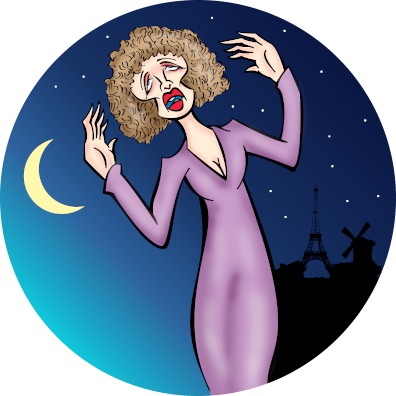

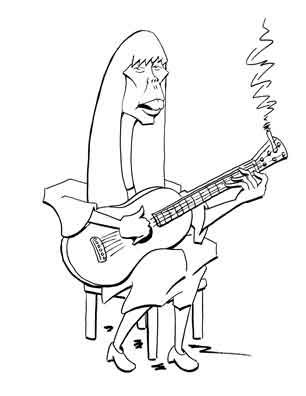
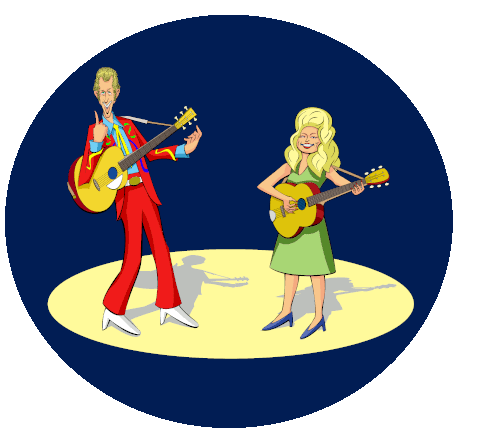
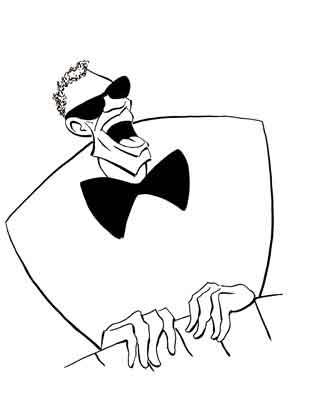

Unlike Frank Sinatra, Bing Crosby, Nat King Cole, Dean Martin, Tom Jones, Tony Bennett, Freddie Mercury, Judy Garland, Perry Como, B.B. King, Joan Baez, Robert Plant, Edith Piaf, Roy Orbison, Joni Mitchell, James Brown, Porter Wagoner, Dolly Parton, Ray Charles, and even a chap named Elvis, there appears to be no book-length biographies about James Andrew Rushing.
Instead, the curious about one of the most influential and important singers of the 20th Century have to seek out the information from various informational reference works. Fortunately, these are legion and some are even correct. After all, Jimmy was one of the most influential and important singers of the 20th Century.
Jimmy was born sometime between 1899 or 1903 depending on who you ask.1 The dates are given variously as June 15 or August 26 and the place as Oklahoma City, Oklahoma.
Part of the uncertainty arises because in that day and age most babies were born in the family home not in hospitals. So Jimmy's birth may not have been recorded except possibly in a now-lost family bible. Also at that time Oklahoma City was not in the state of Oklahoma but in Oklahoma Territory. The capital of the territory was Guthrie which is a bit to the north. Although there were US Censuses taken in 1900 and 1910 which recorded some James Rushings from Oklahoma, they do not appear to be our Jimmy.
Oklahoma City, though, was first named Oklahoma Station in February 1887 as the name of the watering stop for the Atchison, Topeka and Santa Fe Railway. The name was changed to Oklahoma on December 1888 - this was even before the famous "Land Run" of April 22, 1889, when 50,000 residents claimed city lots staked out at the station. Some maps from 1890 list the city simply as "Oklahoma" although other maps indicate the name "Oklahoma City" was used to distinguish the city from the territory (and later the state). The name wasn't officially Oklahoma City until 1923.
But whenever and wherever Jimmy was born, his parents, Andrew and Cora (née Freeman), were musical people. Andrew played trumpet (and/or tuba) and as was common for many proper ladies, Cora played piano. Jimmy started out playing violin and singing in their church choir but when he attended the still-extant Frederick Douglass High School in Oklahoma City he had switched to piano and sang in the glee club.
Jimmy graduated high school - something not usual for the time and place2 - and attended Wilberforce University in Ohio (also still going strong). However, Wilberforce is only about 20 miles from Dayton and 50 miles from Columbus and Jimmy found work playing piano and singing in these cosmopolitan centers. This was a time when good music had to be live music and skilled singers and musicians could find work by providing music for clubs and other venues.3
Footnote
As an example, in 1946 Bill Monroe's Blue Grass Boys consisted of Bill (mandolin and lead and tenor back-up vocals), Lester Flatt (lead vocals and guitar), Chubby Wise (fiddle), Earl Scruggs (banjo), and Howard Watts (vocals and stand-up bass). But as Earl Scruggs was the only band member to have a high school degree, he also kept the books.
Footnote
Around 1920 Paul Whiteman - who commissioned Rhapsody in Blue from George Gershwin and who was billed as "The King of Jazz" and was one of the most popular band leaders of the early 20th Century - found early work in a group playing music for a roller rink.
Jimmy was distinctive not only for his singing but also for his stage presence. He was dubbed "Mr. Five-by-Five" from his stature and began moving around the country and singing with various bands. By the mid-1920's he had relocated to Los Angeles where he joined up with Jelly Roll Morton.

Although Jelly Roll's band was one of the most popular at the time, Jimmy's big break came sometimes around 1927 to 1930 (the dates are variously reported) when he moved to Kansas City. Kansas City had emerged as a center of jazz and a new type of music was emerging. It was played by larger bands than before with as many as three or more saxophones in the line-up.
And one of these pre-Swing Era bands was Walter Page’s Blue Devils. It was with Walter that Jimmy made his first record. That was on November 10, 1929, where Jimmy sang "Blue Devil Blues". Even at that early date, you can tell that Jimmy was a blues singer and not a crooner.
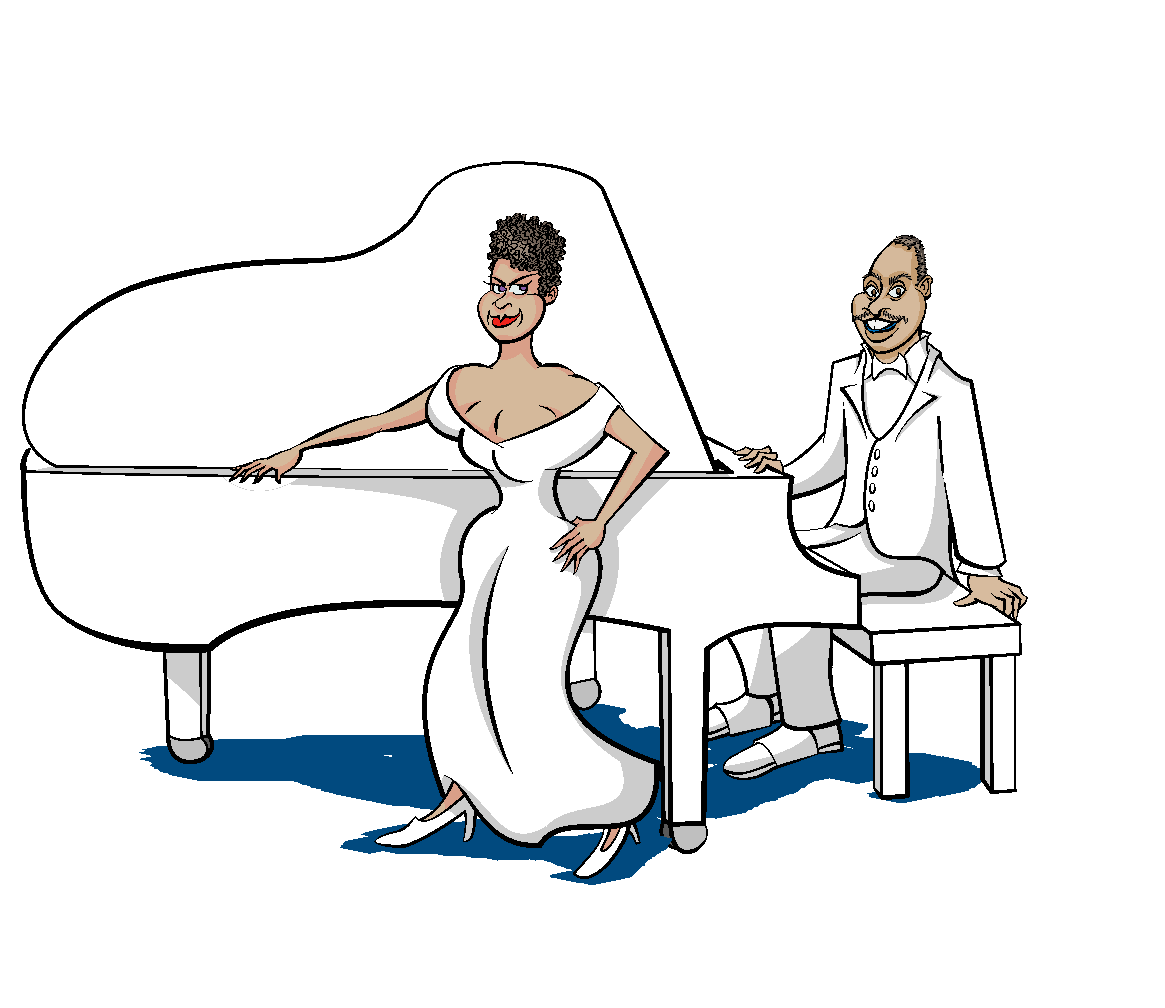
Among Jimmy's fellow Blue Devils was a piano player named William James Basie. Dubbed "Count" by his friends, Bill soon split off to play for valve trombonist and pianist Bennie Moten (sometimes cited as Molten or Molin). Jimmy followed suit and after Bill formed his own band Jimmy began a long association with Count Basie and his Orchestra.
Jimmy sang for the Count's band until 1948 when the post-War economics made big bands increasingly difficult to maintain. However, Jimmy kept singing, either with his own groups or as guest appearances with others. Although often seen as a blues and later swing singer, he was a master of many styles. Among the bands he sang with were as varied as Benny Goodman, Dave Brubeck, Duke Ellington, Coleman Hawkins, and Earl Hines.
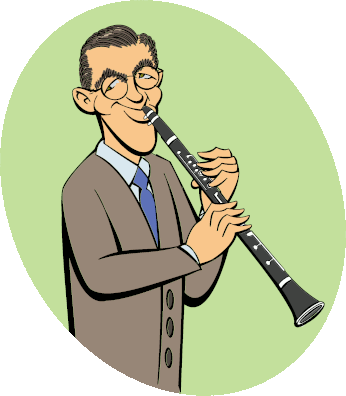
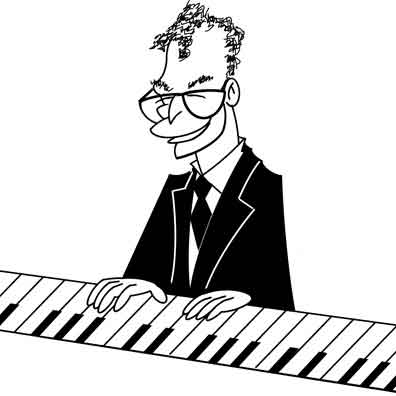
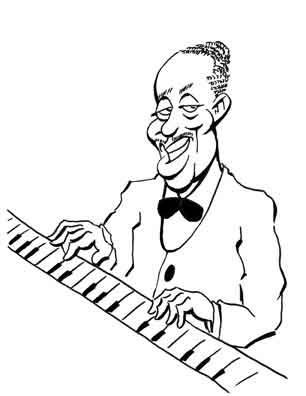
Although Jimmy is not that well known to the general public today, we have to remember there are also people who have never heard of Woody Guthrie, Pete Seeger, Cisco Houston, and - believe it or not - Frank Sinatra. But many of the students of American music and particularly jazz know who Jimmy Rushing was.
Audiences today can see Jimmy in action in various videos and his recordings are widely available. And of course Jimmy appeared in cinema. Some were brief appearances such as in Crazy House starring the now largely forgotten Olsen and Johnson. A more substantial part was in The Learning Tree in 1969. This is a considerably underrated movie about a young black teenager, Newt Winger, whose otherwise idyllic life in early 20th Century rural Kansas is nevertheless tainted by the institutionalized racism of the time. The movie was written and directed by Gordon Parks and was based on his semi-autobiographical novel of the same name.
Not Remembered