Yes, everyone knows about the Folk Revival of the 20th Century. This was the time when traditional music achieved a surprising popularity among the mainstream population.
Scholars debate the time and duration of the Folk Revival and even if there were multiple folk revivals or merely different parts of what was a long-term (and even continuing) musical phenomenon. There were definitely at least two parts, one beginning in the late 1930's through the early 1950's. This revival saw the likes of Woody Guthrie, Pete Seeger, and Burl Ives.1Footnote
There was a bit of a pause in the early 1940's as there was a War on. Pete served in the Army in the Pacific and Burl in what was then called the Army Air Force. Woody was in the merchant marine serving on ships transporting troops. Then just as the war in Europe was ending Woody went into the Army.
The First Revival
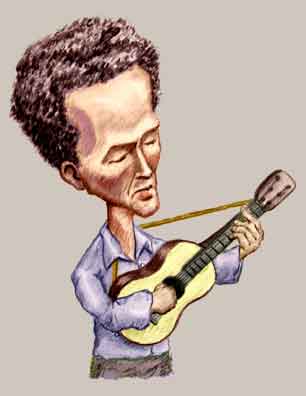
Woody...
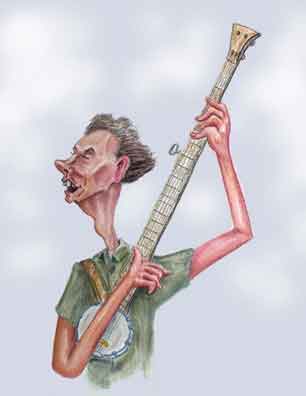
... Pete ...
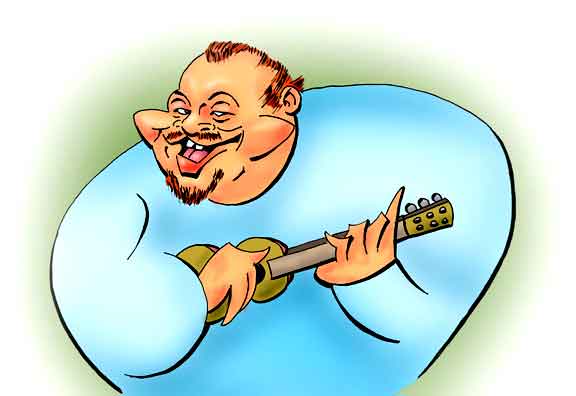
... and Burl.
Then there was a second part beginning in the late 1950's, although this is what people call the Folk Revival of the 1960's. And if you hear someone just mention the "Folk Revival" this is the Revival they mean.
And of course everyone debates just what makes a singer a folk singer. Today the definition seems to cover people who sit on their front porches and pick and sing and yet the meaning also can include multimillionaires who win Nobel Prizes.
But if you  look it up you'll find clarity with definitions like:
folk singer: a singer of folk songs.
Naturally that sends you to:
folk song: a song of a particular folk
Now if you look further you might stumble across writings by scholars that tell you:
folk song: songs that are transmitted by oral tradition from a particular group, often bound by familial, ethnic, or regional ties.
The more discourteous snort that a modern folk singer is not just a contradiction in terms but they seem to think all you need to do is to pick up an acoustical guitar and wear old faded work shirts and bluejeans. So we have yet another and rather snarky definition of a folk singer as:
folk singer: someone who gets paid a million dollars a year to sing how great it is to be poor.
Certainly no one can doubt that the ladies and gentlemen shown above are folk singers by any meaningful definition. John McCutcheon, Barbara Dane, Tom Paxton, Spider John Koerner, and Odetta certainly have sung songs "transmitted by oral tradition from a particular group, often bound by familial, ethnic, or regional ties."
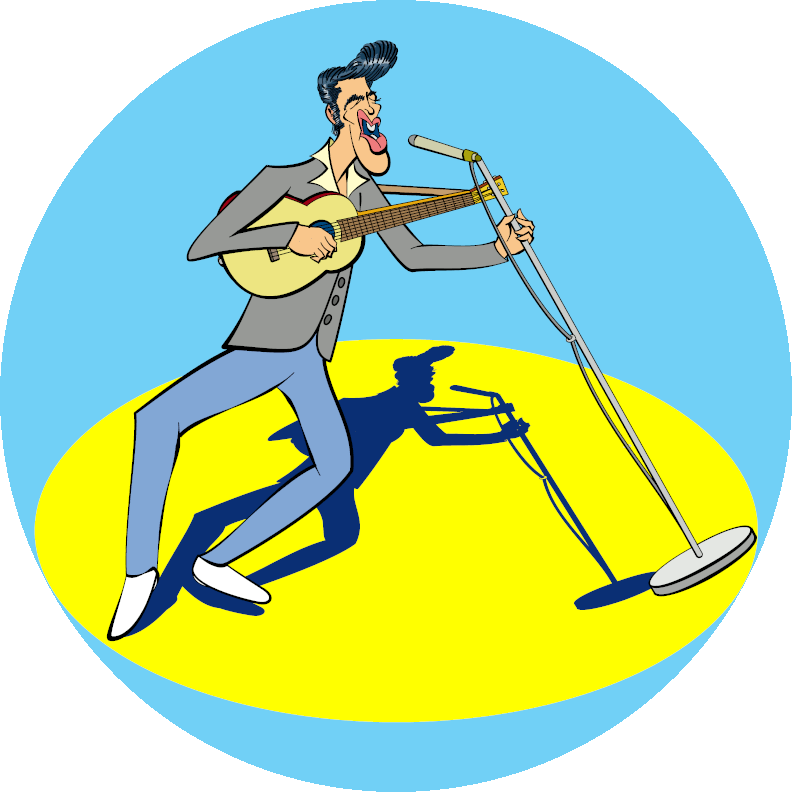
A Truck Driver From Memphis
(Click to zoom in and out.)
But just when did folk songs become a musical genre of the American Collective Consciousness? Or rather how did folk music become part of mainstream entertainment and at one time eclipsed the songs of a former truck driver from Memphis?
Well, there's no better place to follow trends in American popular culture than Billboard Magazine. Billboard has been around for well over a century. Starting off as a general entertainment organ, Billboard soon began to emphasize music, particularly when recordings and radio became widely available.
But ... (and it's a Big But) ...
A perusal of the first fifty years of the magazine showed scarcely a gibber nor squeak about folk music. The word "folk" showed up, yes, but usually in the normal meaning of a group of people. So you would read about "show-folk" but not about a music called folk.
But then on January 1, 1944, there was a column titled:
AMERICAN
FOLK TUNES
and TUNESTERS
COWBOY SONGS, HILLBILLY TUNES,
SPIRITUALS, ETC.
A column of comment designed to keep readers
informed on what's doing in the hillbilly field. Address all communications to Folk Tunes Editor.
Now a careful reader will note the comment on "what's doing in the hillbilly field."
Ha? (To quote Shakespeare.) "Hillbilly" field?
Indeed (again Shakespeare). And if you delve into the article you'll find among the "hillbilly" artists are Jim Boyd and the Cowboy Ramblers, Riley Puckett and the Drifting Hillbillies, Tex Owens, Roy Acuff, and Bing Crosby (!) and the Andrews Sister (!!) whose recording "Pistol Packing Mama" was called the "tops in the hillbilly field".
Of course, no critics worthy of their columns would consider Bing Crosby a "hillbilly" artist. So it was the songs, not the singers, who defined the genre. On the other hand, obviously there was no requirement that the song was from oral tradition since "Pistol Packing Mama" was written in 1942 by Al Dexter. So it seems Billboard's definition was a style of music that the American audiences associated with the inhabitants of rural America.
So things continued until June 18, 1949, when "Lovesick Blues" by Hank Williams reached the #2 spot. Keeping with Billboard's rather broad definition the song was listed as a "folk" song. A week later - July 26, 1949 - "Love Sick Blues" had climbed to #1.
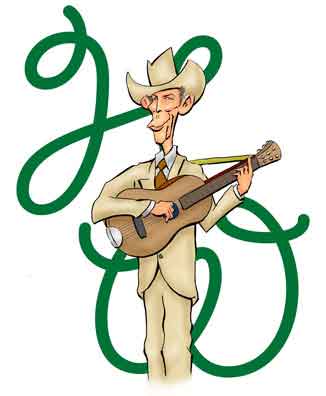
Hank Williams
Country, Folk, or Hillbilly
But - another Big But - although the song was still part of the "folk" category, it was labeled parenthetically as a new sub-class called Country and Western. But in keeping with the nostalgia of the time, the name still commonly used for the music - even by Hank himself - was "hillbilly".
For the next ten years Billboard still lumped folk, country, and yes, "hillbilly" as one and the same. The matter wasn't made any clearer with the first Grammy Awards in 1959. Although there was a separate "Country Award" category it went to three college kids - Dave Guard, Nick Reynolds, and Bob Shane - singing as The Kingston Trio whose single "Tom Dooley" had reached #1 on Billboard's Hot 100. One thing was clear to the listeners, though. "Tom Dooley" may have been a folk song, but it was NOT Country and Western nor was it "hillbilly".
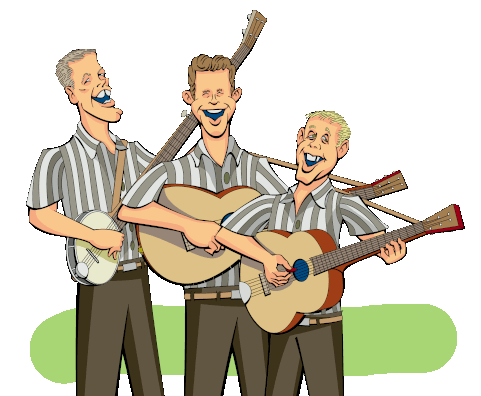
The Kingston Trio
Dave, Bob, and Nick
Regardless of its classification "Tom Dooley" was a hit, and by most (unreferenced) sources, it sold 6,000,000 copies. Even at 2¢ per record that would make a nice bit of change for the singers.
The Kingston Trio were clearly neither hillbilly nor Country and Western. So bowing to the inevitable, in 1960 the Grammys introduced an award for the Best Ethnic or Traditional Folk Recording. Today this has now been supplemented with Best Polka Album, Best Blues Album, Best Traditional Folk Album, Best Contemporary Folk Album, Best Hawaiian Music Album, Best Native American Music Album, and Best Zydeco or Cajun Music Album.
The Sixties Revival
Joan...
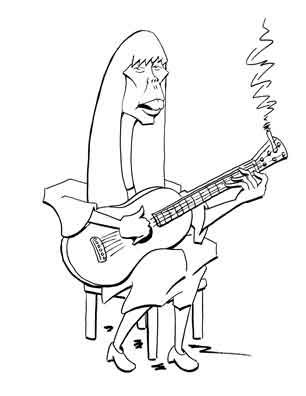
... Joni ...
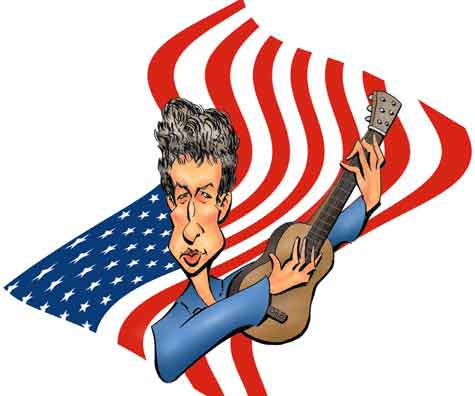
... and Robert.
But it was the Kingston Trio and "Tom Dooley" that kicked off the folk revival of the 1960's. In fact folk music quick-started an entire industry that was led by "urban" folk singers like Joan Baez, Judy Collins, Joni Mitchell, Peter Paul and Mary, and a future Nobel Prize winner named Robert Zimmerman. Folk singers not only appeared on mainstream television variety shows but there was even a nationally broadcast folk music program, Hootenanny, that ran for two years.
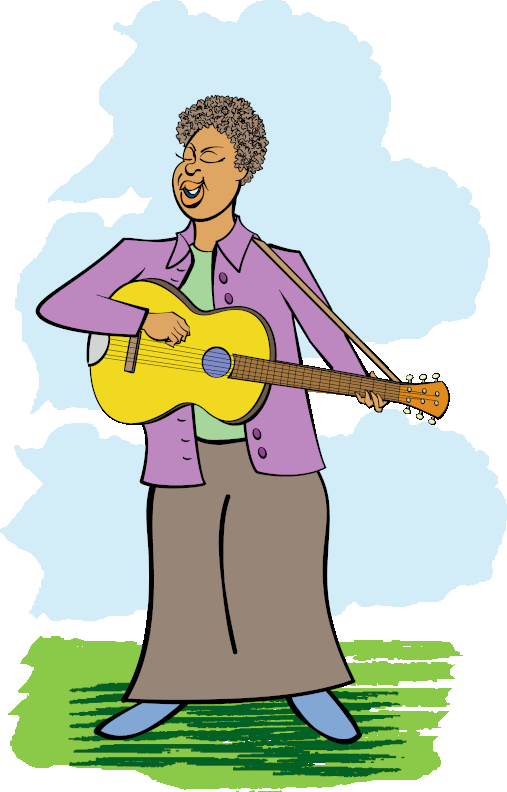
Odetta Holmes - known professionally as Odetta - was a major figure in the 1960's Folk Revival. She was born in Birmingham, Alabama, in 1930 but after her father died, she moved with her mother to Los Angeles. In school her talent in both music and acting was evident and she began performing professionally while still in her teens. But in her early twenties she had moved to San Francisco which hosted a number of folk music night clubs.
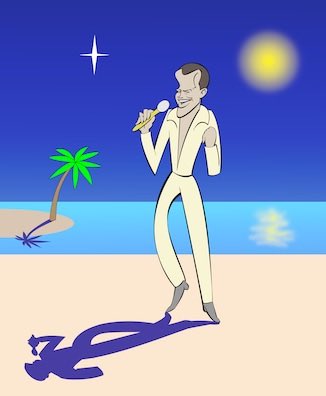
Harry Belafonte
He was influenced.
(Click to zoom in and out.)
Odetta was heavily involved in the Civil Rights Movement and performed at the 1963 March on Washington where Martin Luther King delivered his I Have a Dream speech (Martin was one of her biggest fans). Throughout the Sixties she appeared on a number of television shows which ranged from Have Gun Will Travel to Sesame Street. She was also a guest on mainstream variety and talk shows including The Johnny Cash Show, The Tennessee Ernie Ford Show, The Today Show, The Mike Douglas Show, The Joey Bishop Show, The David Frost Show, The Late Show with David Letterman, and The Ed Sullivan Show. Even after her health began to decline, she kept performing. Joan Baez, Janis Joplin, and even Harry Belafonte said they were influenced by Odetta's singing.
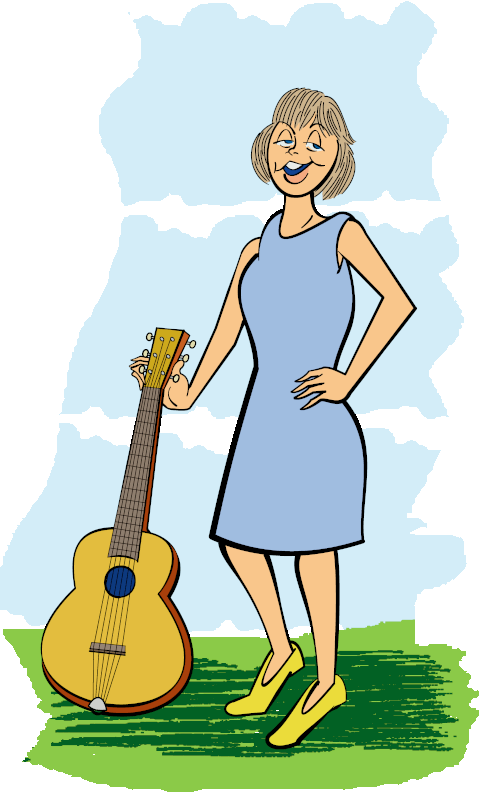
Barbara Dane was also one of the early members of the Folk Revival. Like Odetta she exhibited precocious talent and began performing at an early age. Her deep bluesy voice attracted the attention of famous musicians (including Louis Armstrong) and she appeared on a number of television shows including The Tonight Show with Johnny Carson. Although some folk musicians saw jazz as the enemy that certainly wasn't true of Barbara who performed regularly with jazz groups.
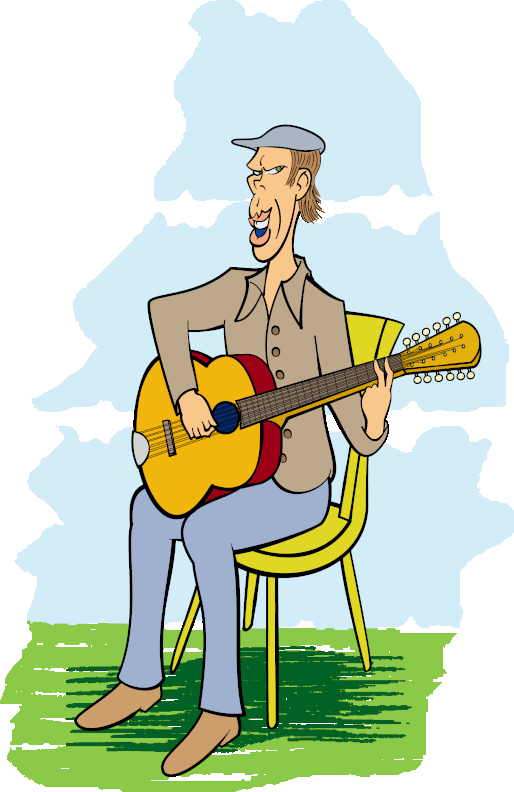
Although the folk scene seemed to be disproportionally represented by residents of the East and West Coast, there were singers hailing from the Midwest, and "Spider" John Koerner was a lifelong Minnesotan. The folk scene in Minneapolis centered around Dinkytown, the neighborhood at 14th Avenue and 4th Street Southeast near the University of Minnesota. In the late fifties and early 60's Spider John, who sang and played with a rambunctious style, was a regular performer. He influenced a number of younger aspirants including the future winner of the Nobel Prize in Literature. Although Spider John is usually listed among the blues singers his songs such as "Hobo Waltz" and "Brady and Duncan" are not so easily classified.
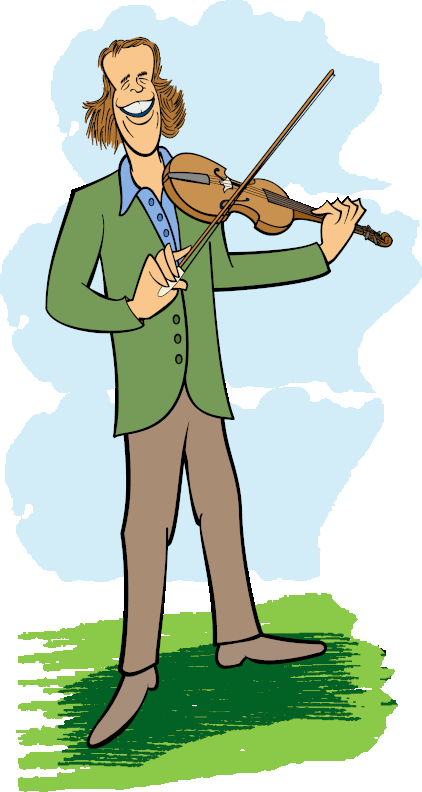
John McCutcheon hails from Wausau, Wisconsin. Although the stereotypical (and curmudgeonly) image of a folk singer as someone who tries to play the guitar and can't sing, John belies this image. He plays guitar, yes, but also the fiddle, banjo, autoharp, hammered dulcimer, Appalachian dulcimer, mandolin, jaw harp, and harmonica all with elevated skill. Like all of the folk singers mentioned, John has released many recordings - traditional songs and those of his own composing - starting with the album How Can I Keep From Singing? which remains one of his best.
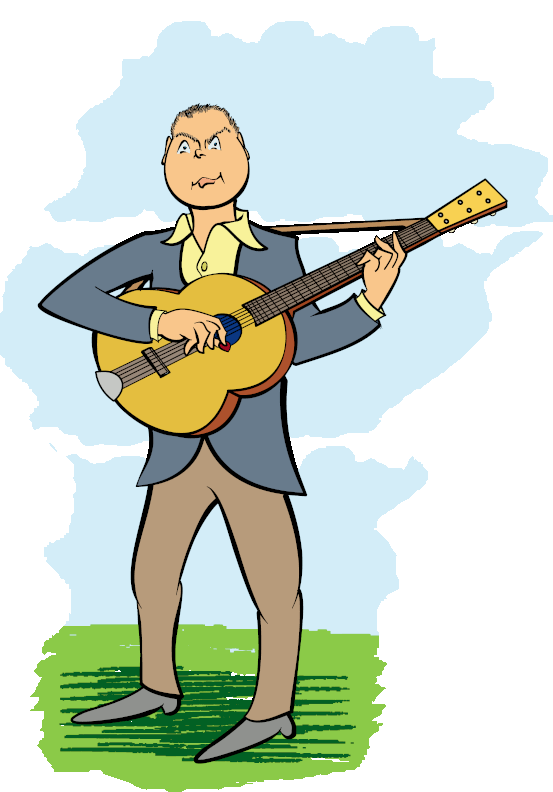
Another Midwesterner of distinction is Thomas Richard Paxton who was born in Chicago although the family moved to Bristow, Oklahoma, when he was 10. Tom is not just a singer but a prolific songwriter and few of the teenagers who sang along with the cacophonous Top Ten Hit "Bottle of Wine" as performed by the Fireballs were aware they were singing one of Tom's songs. Tom was a guest on Pete Seeger's television show Rainbow Quest which was arguably the best and least watched of the folk music television shows that aired during the 1960's.
Despite his fame, Tom has been quite accessible to his fans and those who have dropped him a note were often pleased to get a reply. And it wasn't unheard of for customers to walk into a local book or record store and find Tom with his guitar singing a few songs for the clientele. Oh, yes, Tom also won a Lifetime Achievement Grammy Award in 2009.
Although folk singers and fans remain dedicated to their music, the Folk Song Revival - like the Phenomenon of the Bohemians, Hipsters, Beatniks, and Hippies - is now part of the distant past. If any date can be given to its end, that can be pinpointed to February 9, 1964, with the appearance of a modish quartet from Liverpool on The Ed Sullivan Show. Rock and Roll, it seems, was here to triumph.
Ed
A Really Big Shew

The Fab Four
Here To Stay
Although many folk songs are of a serous nature, there is always room for levity. So relating a few of the Folkie Funnies will not be amiss.
Why did a folk musician get kicked out of the group?
He accidentally sang a note in tune.
What do you tell a folk musician who worries about learning to play an Appalachian folk banjo?
Tell him not to fret.
And then there's:
A jazz musician, a Country and Western singer, and folk singer walked into a bar.
The bartender asked, "What is this? Some kind of a joke?"
References and Further Reading
"Remembering Odetta, The Voice of the Civil Rights Movement", Doug Yeager, ASCAP, February 28, 2018.
"Paxton, Thomas Richard (1937 - )", Guy Logsdon, The Encyclopedia of Oklahoma History and Culture.
"John McCutcheon: An Icon Who Listens", Cara Cormier, San Diego Troubadour< October 2025
Rainbow Quest - The Folk Music Revival and American Society, 1940-1970, Ronald Cohen, University of Massachusetts Press, 2002.
The New Merriam-Webster Dictionary, Merriam-Webster, 1989.
The American Heritage Dictionary of the English Language, Houghton Mifflin Harcourt, 2016.
"American Folk Tunes and Tunesters", The Billboard, Vol. 56, No. 1., January 1, 1944, p. 59.