Art Tatum
(Click to zoom in and out.)
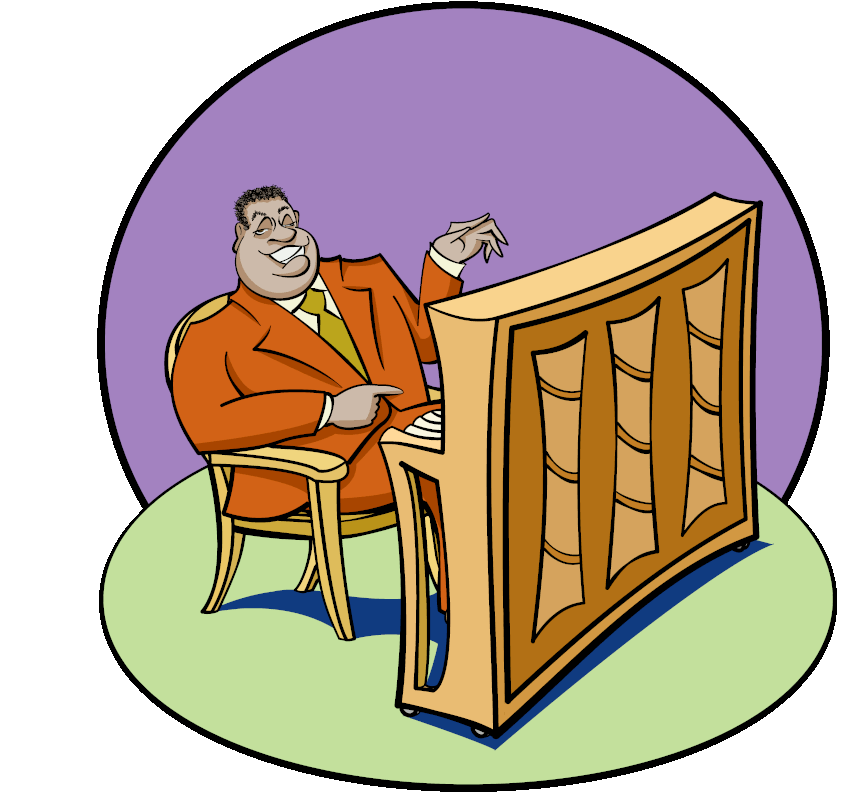
While radio stations and night clubs overflow with hillbillies and rock-and-roll singers, jazz musicians - who are making America's first significant contribution to serious music - are too often without jobs.
- Prestigious Academic Publication of a Prestigious American University
We see, then, that prestigious academic publications of prestigious American universities have in their readers a share of jazz fans. So we might suppose that the prestigious correspondent of the prestigious academic publication was a fan of the great - and prestigious - jazz pianist, Art Tatum.
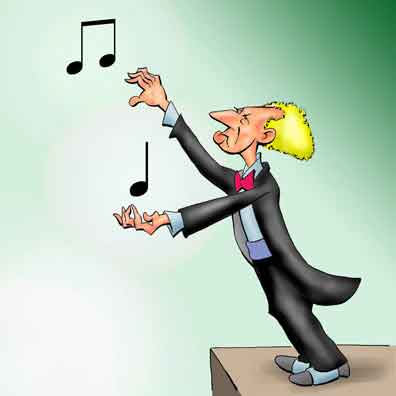
Leopold! Leopold!
A Fan of Art's
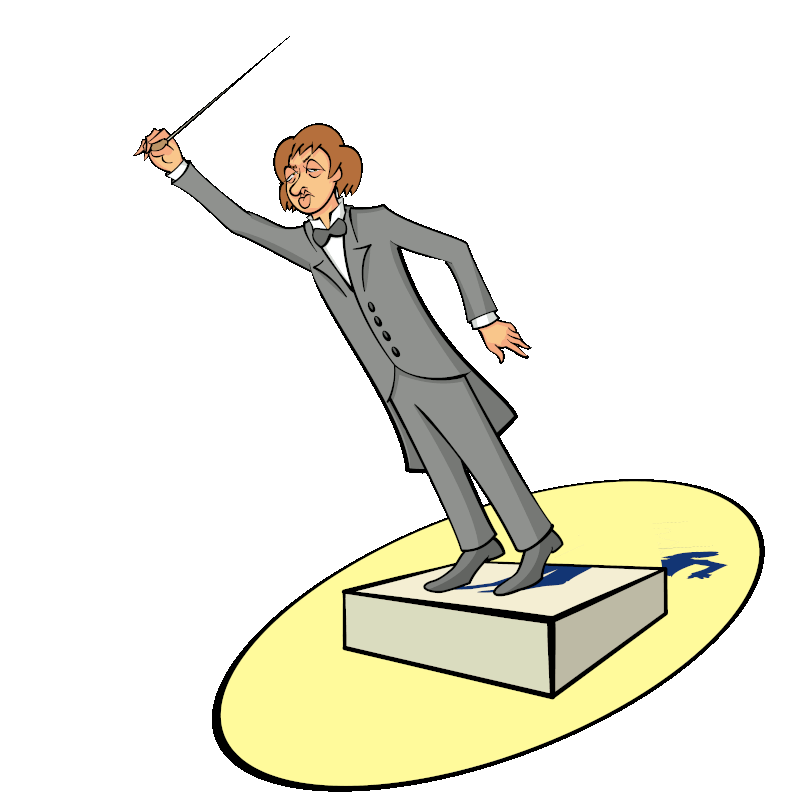
Andre
Also a fan.
(Click to zoom in and out.)
But yet (to quote Shakesepare),1 Art Tatum is not a pianist well known to the general populace. True, among his fellow jazz musicians, he was considered the best of the best. Even great classical musicians were most impressed with Art's tickling of the ivories. Painist Vladimir Horowitz praised Art's playing and conductor Leopold Stokowski ("Leopold! Leopold!") would stop by the club in Chicago where Art was performing. Andre Previn - himself a child prodigy on the piano before he took to conducting - was a big fan. Today if you go and look at various lists of Top Jazz Pianists of All Time, you'll likely find Art at the top.
Footnote
"Act II, Scene V", Antony and Cleopatra, William Shakespeare (author), Edward Blount and Isaac Jaggard (printers), 1623.
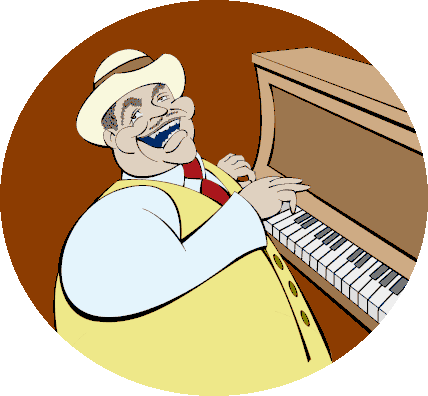
Fats Waller
(Click to zoom in and out.)
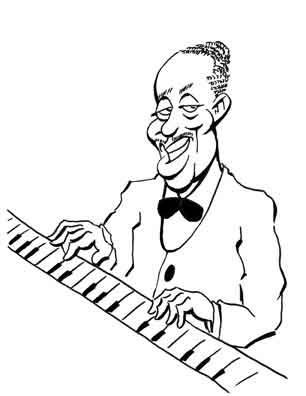
Duke Ellington
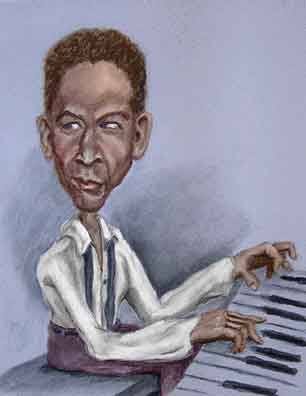
Jelly Roll Morton
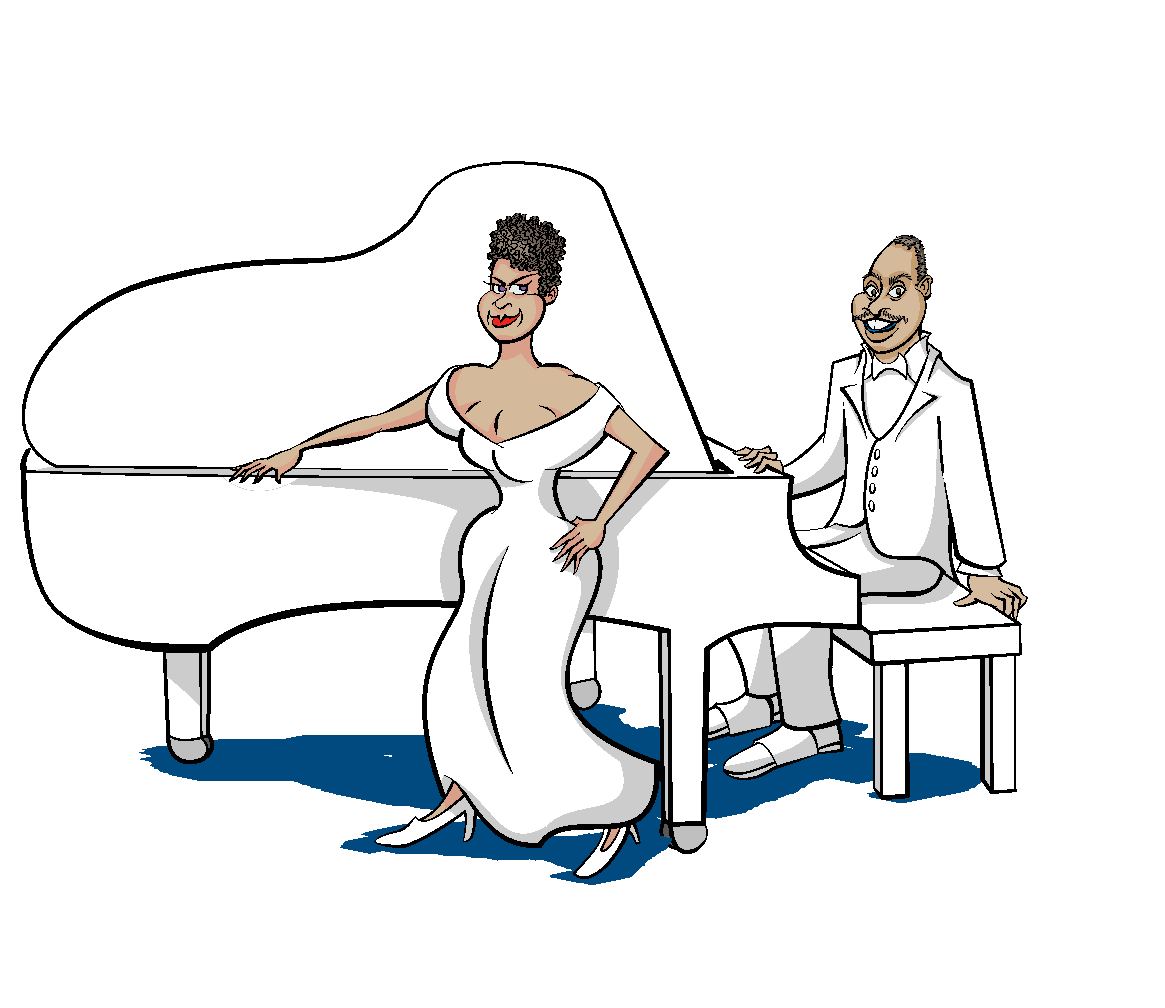
Count Basie and Ruth Brown
(Click to zoom in and out.)
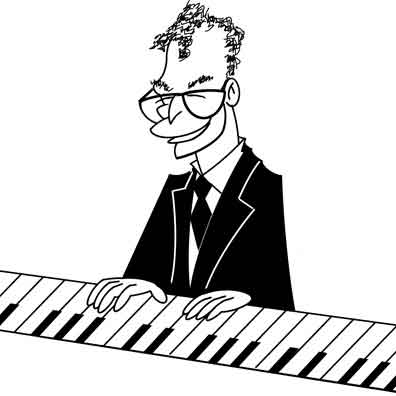
Dave Brubeck
OK. So why doesn't Art have the name recognition of the likes of Thelonious Monk, Herbie Hancock, Oscar Peterson, Duke Ellington, Fats Waller, Count Basie, Earl Hines, Jelly Roll Morton, or Dave Brubeck? Well, certainly part of this can be ascribed to Art's own tendency not to seek venues of high publicity. For instance, when he began playing professionally around 1928 he played in clubs around Toledo, Ohio - a city not thought of as the hottest hotbed of jazz. Also Art couldn't expect much publicity by playing in places which provided potable liqueurs and brewed beverages at a time when it was illegal to manufacture, transport, and sell alcoholic drinks.2
Footnote
During Prohibition, though, it was perfectly legal to buy and drink alcohol if it was consumed at the location where you were served. So if you stocked up on liquor, beer, and wine before the 18th Amendment went into effect, you were not breaking the law if you served drinks to your guests (as long as you didn't charge for it). Eveb customers of speakeasies were not technically breaking the law although during a raid they were sometimes arrested anyway.
The loophole in the 18th Amendment was deliberate since a lot of the Congressmen who voted for the 18th Amendment liked to drink and were rich enough to stock up their cellars. And from the years of Prohibition - 1918 to 1933 - alcohol was often served at the White House.
Ironically Art's outstanding skill may have hindered the development of his fame. Yes, his outstanding skill may have hindered the development of his fame. Art's playing tended be filled with rapid - even lightning - runs, arpeggios, and passages. Sometimes he played so fast that some tunes weren't immediately recognizable and there are critics even today who say that after a while all his songs begin to sound the same.
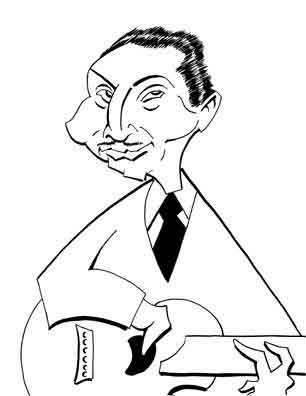
Django Reinhardt
Of course, Art's fans pooh-pooh such criticism. Art could play laid back and easygoing songs as well and Art's improvisation never went beyond the bounds of good taste. Of course, in matters de jazzpianoibus, just as in matters, de opinionibus, non est disputandum
Art was born in 1909 and NOT into abject poverty. In the early years of the 20th Century, Toledo, Ohio, was in fact a growing city where Art's father, Art, Sr., was a skilled mechanic. If the family had to count their pennies, they certainly lived comfortably enough.
The Tatums were a musical family. Art, Sr., played guitar and his mom, Mildred (née Harston) played piano. Mildred also made sure that both Art and his sister, Arline, practiced on the instrument but it was soon evident that it was Art who had music in his soul.
One problem, though, was that Art's eyesight was extremely poor. In fact he was legally blind. The consensus is that he suffered from cataracts and a number of operations helped and his teachers remembered he was able to function pretty much as any other kid. Sister Arline said he was able to see adequately in one eye, and others who knew him said he had reasonable vision but it was directed downward. In any case he could play cards and shoot pool with his friends. Art was also - as was his dad - a big sports fan and he played basketball, football, and baseball.
Art first attended Toledo's public schools but in November, 1924, when he was fifteen, he moved from Toledo to enroll in the Columbus School for the Blind. At some point he had become a student of a piano teacher named Overton Rainey. It's not known where Overton taught. Different sources cite different schools but others say the instructions were private lessons.
In any case, Art remained at the School for the Blind little more than a year. By then he could play at the professional level. Aiding Art's playing was a phenomenal memory, particularly when connected to sounds, and he had perfect pitch.3 He could not only quickly learn complex tunes and harmonies, but he was even able to remember people he met years before simply by the sound of their voice.
Footnote
Perfect pitch - better termed absolute pitch - is the ability to identify a note by name by the sound alone. Absolute pitch seems to be inborn in many people although it may be that it can develop in those who have music training early. Many famous composers - Beethoven, Shostakovich, Mozart - had perfect pitch although Schubert did not. Leonard Bernstein - as much a composer as conductor - also said he did not.
Art never seemed to go through the struggling artist period. When still in his teens he had organized a band and quickly acquired a reputation as one of the best pianists in town. Of course, when he was growing up, professional musicians were in demand since good music still had to be live music.
Aiding the musicians was that by the 1920's dancing had become the #1 social pastime. At nightclubs you didn't just sit and listen, you would get up and dance. There were also dance contests, dance marathons, dinner dances, high school and college dances, and even "dance halls" which were commercial establishments where for an admission fee of a dime, men and women could just go in and dance.
This was also a time of the "rent party". As economic times got difficult, people would invite friends over to their apartments for an evening of music and dancing. Everyone would chip in to pay the musicians and the idea was there would be enough left over for the host to pay the monthly rent.
As Art broached past his teens, he had already developed a taste for good food and good drink. Although Toledo wasn't quite Chicago, it feted its list of speakeasies which stayed open well past midnight. The musicians were often supplied with generous comestibles and libations and Art took advantage of this benefit.
The speakeasies were also a place for cutting contests. These were competitions between musicians where each would take turns showing his stuff and a winner would be selected by popular acclaim. The prize was chiefly the honor of being designated as the top cat. Of course the winners were also the most likely to find professional employment. Soon Art was acknowledged as the Titanic Tickler of Toledo.
But there were hazards in Art's late night lifestyle. Musicians would be paid in cash which made them easy targets for denizens of the alleyways. One night as Art was returning home - he still lived with his family - he was accosted by a mugger. During the scuffle, Art was hit in the left eye, probably with a blackjack. He was taken to his home where the family doctor was called in. The injury was so severe - his sister said the eye was literally bulging out of the socket - that it may have produced complete blindness. In any case Art refused to undergo any further operations for his eyes.
In the 1920's Toledo was one of the most prosperous cities in the nation with over 240,000 residents with a demand for good music. By the mid-20's Art had become a local celebrity and in 1927 when he was still eighteen, he was given a radio program on Toledo's WSPD (where he was billed as "Arthur" Tatum). With its rapid growth, the city attracted a lot of big name entertainment. Well-established players like Duke Ellington and Fats Waller heard Art play and told him he should move to New York. But Art felt he still needed more practice before he tried for the Big Time.
Art's big break - or what provided him with the wherewithal to move East - came in 1932 when the singer Adelaide Hall came to town on a tour. Although Adelaide was only a few years older than Art, she had already established herself as an in-demand entertainer. In addition to performing in clubs and theaters, she had recorded with the top bands and had starred in Broadway musicals.
As always there are multiple accounts of how Art became her pianist. One story is her regular piano player had become ill and Art was tapped as a temporary replacement. Adelaide was impressed and she hired Art to be her permanent accompanist. Another story is that her pianist was interested in joining one the of big bands and when he left Art was hired to take his place.
In her old age Adelaide - she lived to be 92 - said the truth was that she had heard about Art beforehand and when she got to Toledo she asked him to audition. She then made him a job offer and Art accepted. As Adelaide herself was based in New York, Art moved to the Big City.
Not coincidentally Art's first recordings are with Adelaide. "I'll Never Be the Same" starts off with Art's introduction and he later plays a couple of brief solo passages where his rapid playing is a bit of a contrast to the rest of the song.4 By 1933 he was releasing records under his own name, and among his first solo platters was a souped up boogie-woogie version of "St. Louis Blues"
Footnote
Those who listen to Adelaide may note a touch of an English accent. She was born in Brooklyn but in 1926 had toured Europe where there was no racial segregation. In 1925 she married Bertram Hicks (everyone called him "Bert") who had been born in Trinidad and so was a British subject. The marriage gave her the rights of British Citizenship and a couple of years after touring with Art, she moved to London and lived there the rest of her life.
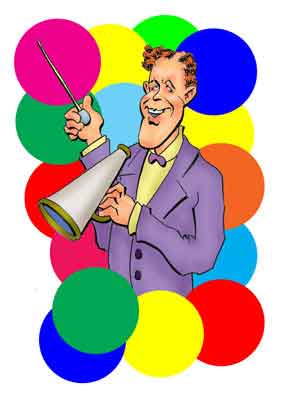
Rudy Vallee
Art started playing in New York at the Onyx Club where as in Toledo he solidified his reputation further. New York was also the center of the burgeoning broadcast industry and he appeared on Rudy Vallee's program named - get this - The Fleischman's Yeast Hour. However, in 1935 he headed back to the Midwest for an extended gig at The Three Deuces Club5 in Chicago. When the Chicago job was over Art headed even further West and played in clubs in California and on radio even appearing on the prestigious program hosted by Bing Crosby.
Rudy Vallee
But Art still made his living mostly in the clubs. A typical Art Tatum day was he would go to the club for the evening performance. This would pay him his salary but once the club closed he'd head to the "after hours" clubs where other musicians and fans would gather. There he would play with other musicians and engage in the cutting and jamming contests. Of course, when it came to technique few could best Art.
Naturally with so much time spent in nightclubs Art continued to mix playing with gustatory pleasures. He'd eat lavish meals and drink copious quantities of beer and bourbon. One of his friends estimated Art would put down a case of beer and two quarts of bourbon in a day. For those who are interested, that's 4500% above modern daily intake guidelines.
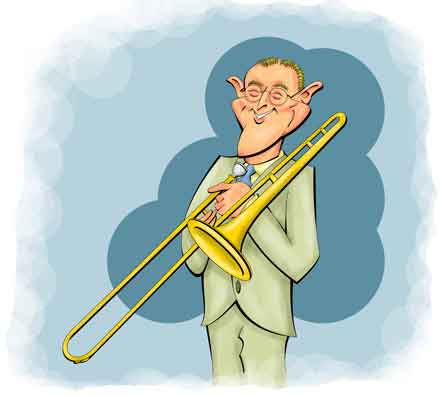
Tommy Dorsey
(Click to zoom in and out.)
In Hollywood Art made more fans and professional contacts. In 1947 he even appeared in a movie. That was The Fabulous Dorseys which was based on an article in The Saturday Evening Post titled "The Battling Brothers Dorsey". As the title of the story suggests the plot involved the often fractious relationship between Tommy and Jimmy Dorsey. In the movie Tommy Dorsey is played by Tommy Dorsey, Jimmy Dorsey is played by Jimmy Dorsey, Paul Whiteman is played by Paul Whiteman, and yes, Art Tatum is played by Art Tatum.
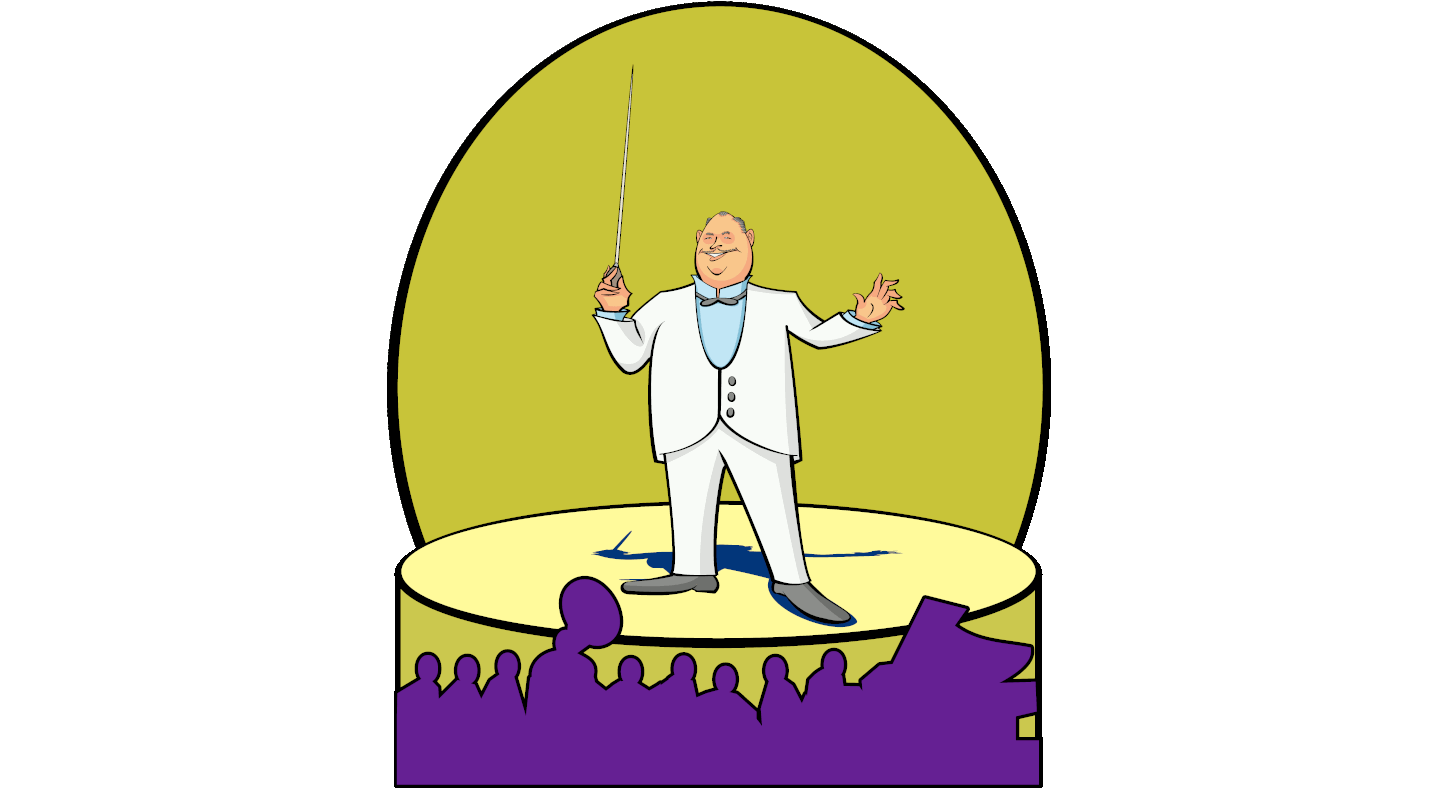
Paul Whiteman
(Played by Paul Whiteman)
(Click to zoom in and out.)
Spike Jones
(Click to zoom in and out.)

Steve Allen
No mean musician.
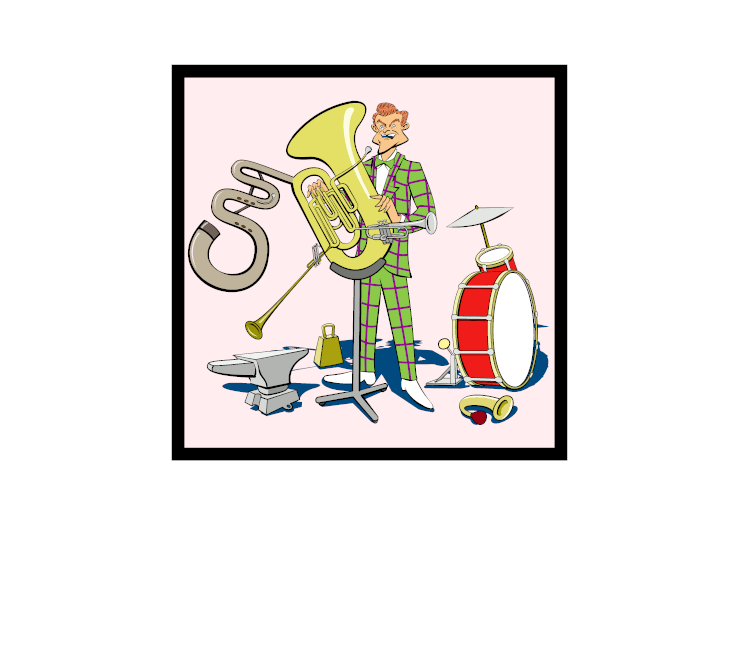
It was inevitable but Art eventually appeared on television. That was in 1954 where he played "Whispering" on The Spike Jones Show where to the untutored ears Art's style seems to approaching what scholars now call "progressive" jazz. He later appeared on an early episode of The Tonight Show when it was hosted by Steve Allen who himself was no mean musician.
Regrettably Art's lifestyle was not crafted of a long and healthy duration. His heft coupled with what was a diet with few healthy alternatives took its toll. He had long suffered from diabetes and uremia, the latter condition being retention of urea in the blood and at the time had no effective treatment. After a tour in 1954, Art was feeling so poorly that he took to his bed. He was admitted to the Queen of Angels Medical Center in Los Angeles where he died on November 5 at age 56.
As is clear from his playing Art was a man of sunny disposition and cheerful demeanor. So he surely would not object to closing this tribute with a few piano pleasantries.
How did the piano player learn to play a difficult tune?
He finally fingered it out.
What's a Steinway?
Oh, about 600 pounds.
Why did the piano player keep hitting the keyboard with his head?
He was playing by ear.
And of course there's:
Two men walked into a bar and saw a fish playing the piano.
"Do you see that?" one of them asked.
"Aw," said the other, "you've seen one piano tuna you've seen them all."
References and Further Reading
Too Marvelous for Words: The Life and Times of Art Tatum, James Lester, Oxford University Press, 1994.
"Art Tatum", Discography of Early American Recordings, University of California-Santa Barbara.
"God Is In The House: Art Tatum - A Biography", Jack Kenny, Book Review, Jazz Views, April 18, 2024.
"Art Tatum", Owens Community College.
"The Great Musical Genius of the 20th Century", Ariel Clef, Gondola Music, November 1, November 1, 2022.
"Art Tatum", The Soul Purpose, DBSS Media.
"Hall, Adelaide (1901–1993), English Heritage.
"Rare Art Tatum Performances Unearthed", Lynn René Bayley, The Art Music Lounge, April 8, 2024.
The Tonight Show, Steve Allen (host), Art Tatum (guest), April 19, 1956.
The Spike Jones Show, Spike Jones (band leader), Art Tatum (guest), April 17, 1954.
"How Did Art Tatum Die?", California Learning Resources Network, February 5, 2025.
The Tatum Legacy, Toledo Stories, Public Broadcasting Service, 2005.
"Art Tatum", Find-a-Grave, Find-a-Grave Memorial ID: 5344, May 3, 1999.