Enrico Caruso
(Click to let Enrico SING!)

True the more severe critics may consider this - ah - "portrait" - of the great operatic tenor Enrico Caruso to be double dipping. But the earlier essay was largely limited to Enrico's role in one of the most improbable Italian operas ever written. That was when Enrico debuted the role of the bandit Dick Johnson in Giacomo Pucinni's The Girl of the Golden West.1 There was, of course, much more to Errico's life.
Footnote
Of course, Giacomo wrote the opera in Italian and the actual title is La fanciulla del West and pronounced something like lah fan-CHOO-lah del West and means something like "The Maiden of the West". As the translation indicates, the word fanciulla is something of an old fashioned or "literary" word. Rarely would an English speaker refer to a young woman as a "maiden". Today you'd probably hear something like ragazza.
It's natural to wonder why Giacomo stuck in an English word in the title. Wouldn't it be better to make it all Italian with something like La fanciulla dell' Ovest?
Well, when Italians refer to the Old West of America, they simply use West. The other native Italian words - such as ovest and occidente - refer to the compass direction or to the cultural and historical "western" civilization.
So if you want to say to your Italian friend "Just last Saturday we went to the movies and watched an exciting western" you would say something like "Proprio sabato scorso siamo andati al cinema e abbiamo guardato un western avvincente."

Yes. That's Errico. Or at least that's what some authoritative sources cite as Enrico's baptismal name. On the other hand, other authoritative sources say his baptismal name was Henricus. It probably doesn't matter much since all three names translate to English Henry.
Errico, though, is a Neapolitan name. Neapolitan is often called a dialect of Italian that is spoken in - where else? - Naples. Other scholars call Neapolitan a separate language. Of course, where a dialect ends and a separate language begins is more or less a linguistic opinion. But Italians from the north often struggle to understand a Neapolitan and there are considerable grammatical and phonetical differences in Neapolitan and standard Italian.
Compared to standard Italian - which arose from medieval Tuscan - Neapolitan often cuts off the inflectional endings, and the unstressed vowels are "neutralized" (that is, are simply pronounced "uh"). The definite article "the" in Italian - il, lo, and la - becomes o, a, and e. The letters c and g can be confused, the linguistic "stop", b, becomes a "fricative"- ergo, is pronounced like a v, and q becomes ch. So a word like questo - "this" - becomes chisto or is even abbreviated further as sto. Neapolitans - it must be pointed out - are often regarded as "provincials" by the aristocratic Romans and Tuscans. So "Enrico" is considered a bit more of a polished name which "Errico" eventually assumed.
There are a number of good books about the life of Enrico (as we will call him). There are also some movies of which the most accessible is The Great Caruso starring Freddie Cocozza who some know better by his professional name of Mario Lanza. However, the Caruso family was not particularly taken by the picture and were even able to temporarily block its release in Italy.

Well, if Enrico sported a Neapolitan name, then he must have been from Naples. Indeed he was. He was born in la Città del Golfo on February 25, 1873. In the various biographies the details of his early life vary a bit. You might read that his dad, Marcellino, was a poor foundry worker and his mom, Anna (née Baldini), had to pick up extra lire as a cleaning woman. The family lived in the San Carlo all'Arena district and were dirt poor, even destitute. On the other hand, in some accounts the Carusos lived in acceptable but "modest" circumstances and other sources even say Marcellino was a well-to-do mechanic.
But whatever their financial status, Enrico was from a large family. But no, he did NOT have 20 brothers and sisters as related in popular legend. It was more like six. But virtually all biographies mention that young Enrico left school at age 10, clearly a marker (as we are assured) of a deprived childhood.
Once more there needs to be a separation of the norms of today and those nigh on a century and a half ago. The truth, though, is that even up to the 1930's stopping formal education after grade school was typical. This didn't mean the kids were necessarily deprived. Training even for professional jobs like engineers, lawyers, and physicians was often by apprenticeships. There were also venues, some provided by the government, for continuing formal education.2 So even after Enrico was apprenticed to a mechanic, Anna insisted her son should attend night school. There he showed talent for both art - all his life Enrico would spend leisure time sketching and he particularly enjoyed drawing caricatures.
Footnote
In the 1870's a poor British laborer named Joseph Wight had been working from age six as a donkey driver in a rock quarry. Then he began attending night classes at a tuition of 6d. per week. Ultimately he progressed to where he was able to pass the entrance examination to the University of Heidelberg in Germany. He earned a Ph. D. in Philology and became Professor of Philology at Oxford. Among his students was an undergraduate named John Ronald Reuel Tolkien.
More recently a young girl in England had dropped out of high school at age 15. After spending some time in dead-end jobs she enrolled in some of the free courses provided by the government. She became interested in philosophy and took enough courses that she passed the entrance examination at Oxford. She completed her degree, went on for a Ph. D., and joined the faculty.
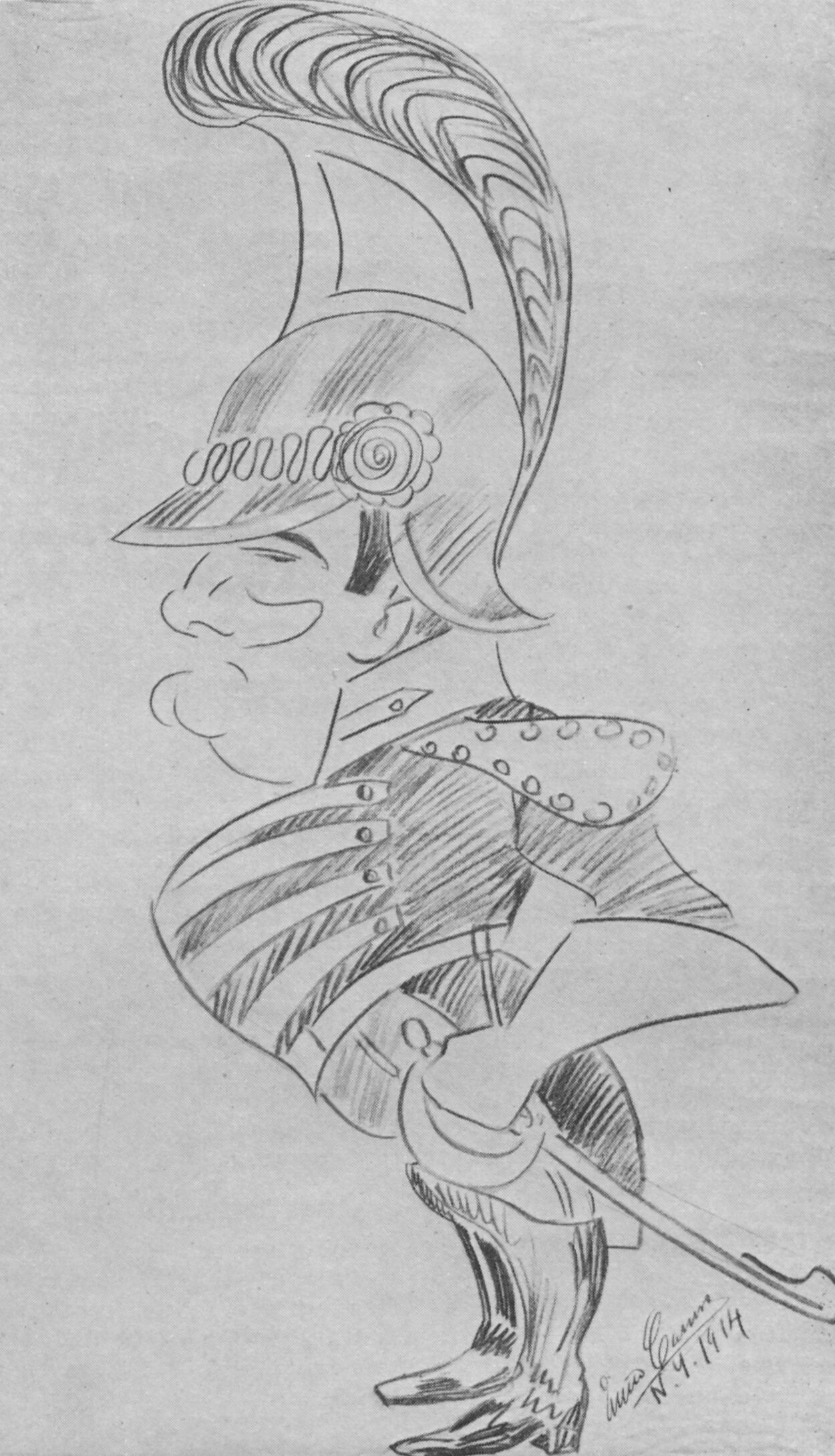
And singing, of course.
That a young working class man would become the most famous operatic tenor in history is not as singular as it might seem. In 19th Century Italy being a musician or singer was actually a practical way to make a living. After all when Enrico was young, music had to be live music and virtually every family had someone who could sing or play an instrument. There was also no nation where music was more a part of the daily life than in Italy. You not only heard music in the theaters and ballrooms, but music came wafting from the cafes and bistros, and you saw musicians playing and singing on the streets.
And of course there was music in the churches. There a talented singer might be singled out by the choirmaster for special training. That is in fact what happened with Enrico. He quickly excelled in his church choir and was selected as a soloist. But he also polished his talents by singing with the street musicians, in the cafes, and at parties.
On the other hand Enrico didn't begin true formal voice training until 1891 when he was 18, and this came about almost by accident. In the course of his singing he met Eduardo Missiano, himself a talented baritone (and future opera singer). But Eduardo also came from a wealthy and influential family. He had been studying with the vocal coach Guglielmo Vergine and after noticing Enrico's ability he took his friend in for an audition. At first Guglielmo wasn't that impressed, but after some hesitation - and perhaps after a bit of arm twisting from Eduardo's father - he accepted Enrico as a student.
Enrico's progress was rapid and in 1895, he was able to land his first part in the opera L'amico Francesco by Mario Morelli at the Teatro Nuovo sopra Toledo (now just called the Teatro Nuovo). With this success he began taking advanced lessons from famed conductor Vincenzo Lombardi who helped Enrico with his high notes. Before the fin de siècle Enrico was singing in opera productions in major theaters throughout Italy.
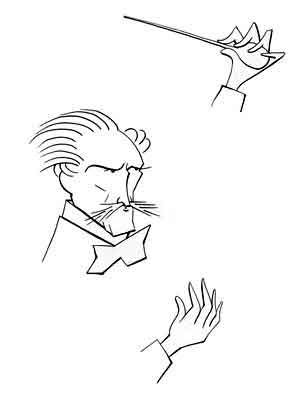
There were, though, an awful lot of opera singers in Italy and it wasn't easy to become a star. But Enrico got a break in 1900 when he sang in Puccini's La bohème at La Scala. The young but even then renown Arturo Toscanini conducted, and the company traveled to South America to acclaim.
Unfortunately back home a performance at the Teatro San Carlo in Naples fell flat. Enrico in particular was singled out for ridicule. Not one to accept what he thought was unjust criticism, he swore he'd never sing in Naples again. He never did.
Despite this temporary setback, as the Century turned Enrico was becoming the best known tenor in Italy. Then his REALLY BIG break came when he was contracted to sing the part of the Duke in Verdi's Rigoletto at the Metropolitan Opera in New York. His Met debut was on November 23, 1903, and he was a smash. From then until 1920 he sang at the opening of each season of the Met. Enrico was a star.
Enrico's life became a whirlwind of international performances, not just in operas, but in concerts as well. He performed in locations as varied as La Scala, London's Royal Albert Hall, Monte Carlo, Warsaw, and Buenos Aires. Enrico even sang in Nashville, Tennessee, for crying out loud!
More than a century after Enrico Caruso's last performance he remains the most famous operatic tenor in history. The irony is that he would be virtually unknown if it weren't for a technological revolution of the early 20th Century.
And just what was this amazing technological revolution of the early 20th Century?
One word. Just one word.
Plastics.
Plastic recordings, that is.
No matter how popular they were in their own time, today virtually all singers and musicians before the 20th Century have been forgotten. The exceptions are musicians who did double duty as composers like Mozart and Beethoven. To achieve musical immortality based on performance alone, you need to have your singing and playing recorded for posterity.
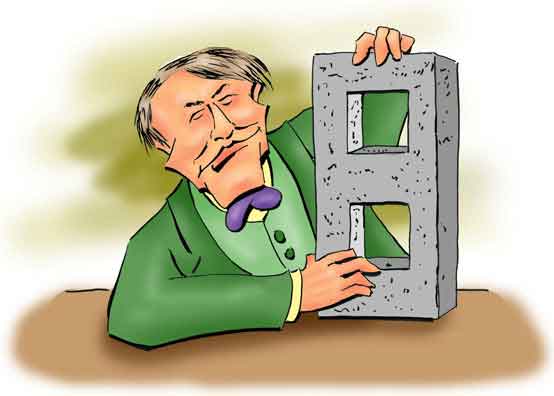
Thomas Edison patented the phonograph in 1878 (he invented other things, of course) and musicians were recording their songs as early as the 1880's. There are recordings of Brahms and Tchaikovsky conducting and in 1889 the opera singer Peter Schram recording a part of Mozart's Don Giovanni. Unfortunately the quality of these early recordings is, at least to modern ears, somewhat lacking.3
Footnote
Inventors had recognized that it was possible to record sound graphically as early as the 1850's. In 1857 the French inventor Édouard-Léon Scott de Martinville patented a device he called the phonautograph that would record vibrations from sound as lines on paper or glass that had been blacked with soot. However, there was no idea that the graphical recording could actually be used to play back the sound.
Of course with modern digital advances it seemed that images of the old phonautographs might be converted to a playable format. This was actually attempted when engineers took Édouard-Léon's 1860 phonautograph of someone singing the French folksong "Au clair de la lune" and converted the graphics to a modern digital audio file. Although sometimes touted as the first intelligible recording of a human voice. when the recording was played on the BBC the announcer became so convulsed with laughter that she had to pause the broadcast.
Enrico cut his first records in Milan on April 11, 1902, for the oddly named Gramophone and Typewriter Company. Other sessions followed. Then once he was in America he recorded for the Victor Talking Machine Company, which after being absorbed into RCA, became one of the biggest record producers of the 20th Century. Within a few years millions of people were listening to Enrico as they sat in the comfort of their own homes.
Unlike some early recording artists who were often paid little to nothing, Enrico garnered extremely lucrative contracts. One source mentioned $4000 per session plus 40% royalties (although the $4000 may have been an advance). The one frustration for the modern listener is that Enrico's recordings were all made during the "acoustic" era. Although the sound of his records is often better than a lot of other recordings of the time and there are modern digital enhancements, some critics say you still can't hear the real Enrico singing at modern quality.
But the records did a lot to cement Enrico's fame. Within the next few years Enrico became one of the World's top celebrities. It is ironic that the fame of the most acclaimed operatic singer in history is now frequently compared to that of modern rock stars.
In America Enrico's fame took him literally from sea to shining sea. On January 15, 1906, he appeared in Aida at the Metropolitan in New York. Next on April 12, he was performing in the comic opera Marta in Kansas City. Then less than a week later, on April 17, 1906, he was in San Francisco where he appeared as Don José in Bizet's Carmen.
The next morning at 5 o'clock the whole city began to shake. Everyone who was able ran from the houses and buildings into the streets. The photographer Arnold Genthe was asleep in his house which although badly damaged did not collapse. He went into the streets and eventually made it to the still-standing St. Francis Hotel. In the lobby he came across Enrico who was in a bathrobe and pajamas. "'Ell of a place! 'Ell of a place!" Enrico said. "I never come back here." Enrico and his valet made it to Oakland where they took a train to New York.
There were other - well, "events" - that did not run smoothly for the new resident immigrant. Just a few months later, on November 16, 1906, Enrico was visiting the Central Park Zoo. Like many visitors he liked to see the monkeys. So he stopped by the Monkey House where he spent some time looking at the little animals gamboling about their cages.
Exactly what happened isn't clear. According to Park Policeman or Patrolman or Detective John Cain (the stories don't agree on his title and sometimes spell his name as Kane) Enrico "annoyed" a lady. The Monkey House was, in fact, part of Officer Cain's regular beat and his specific assignment was to make sure women were not bothered by "mashers" (direct quote).
Officer Cain told Enrico (who he didn't recognize), "You'll have to come with me, mister." Enrico protested his innocence but at that time his English was still pretty rudimentary. So he was hauled off to jail. Somehow the word got out that the Metropolitan's #1 tenor was in New York City's hoosegow, and after Enrico sat on ice for a few hours the manager of the Metropolitan Opera, Heinrich Conried, showed up and posted the rather steep $500 bail.4
Footnote
Comparing money values from over a hundred years ago to today's prices is almost impossible. One popular comparison is to use the Consumer Price Index (CPI). This is a pooled index based on the cost of a number of everyday items. Using the CPI, we learn that Enrico's $500 bail is equal to $18,000 in today's currency. However another method of estimation is based on the change in Gross Domestic Product. This puts the modern price of Enrico's bail at nearly $500,000! Quite a difference!
Even just using the CPI, the problem is that some items don't increase in price at the same rate. For instance, in 1906 you could pick up a 1 pound can of tomato sauce for 25¢. Today this would run about $4.50. So by this "tomato sauce" inflation rate, Enrico's bail would be about $9000.
On the other hand, 22 pounds of 1906 sugar would run about $1.00. Today that amount costs around $50. So if we go by "sugar-inflation" Enrico would have to pay out $25,000!
Maybe Enrico should stay away from sugar.
The proceedings became complicated since the next day neither Enrico or the woman showed up for the hearing. The lady in fact had given Officer Cain a false address. Enrico, though, was represented by the prominent New York lawyer Abram Jesse Dittenhoefer (yes, that was his real name). Abram handed the judge a note from Enrico's physician, Dr. Ludwig Weiss. Dr. Weiss affirmed that Enrico was suffering from sciatica and was in too much pain to appear.
Enrico's sciatica cleared up in a couple of days and he made it to court. To this day scholars wonder what actually happened. On the stand, Officer Cain amplified his testimony. He said that Enrico had specifically engaged in, well, an "action" that was sometimes seen as stereotypical behavior of his fellow countrymen toward the ladies and was only made illegal in 2012 after a ruling of Italy's Supreme Court. Besides, Officer Cain added, he had been keeping an eye on Enrico for some time. Enrico was a regular visitor to the Monkey House and Officer Cain had seen Enrico repeatedly "annoy" other women.
Counselor Dittenhoefer seemed a bit cross. He asked Officer Cain if he had seen Enrico "annoying" many women over a span of weeks or months, why did he do nothing and wait until now to haul Enrico in? Besides where was the woman herself? She had yet to appear (and in fact she never did). The case, Aram said, should be dismissed.
For his part Enrico completely denied the charges. He claimed he was in the Monkey House for only a few minutes. He had done nothing improper. Nevertheless after the three day trial, Enrico was found guilty. He was fined $10. A quick appeal proved ineffective and Enrico had to pay up. Presumably the $500 bail was returned to Heinrich.
Public opinion on the case was divided. During the trial the room was mostly filled with Enrico's supporters. Others, though, were not of a let-bygones-be-bygones mood. There were even murmurings that Enrico should be deported.
On the other hand, attendance at Enrico's performances remained high. And when he first appeared on stage after the trial, he received an ovation. There were certainly no further accusations of Enrico annoying anyone and he continued to be the Met's #1 star.
Enrico remained the #1 opera star not just at the Met but in the World. He not only continued performing and recording but on January 12, 1910 - a most notable date - Enrico was on stage for the first radio broadcast of an opera. However, as commercial radio was still 10 years in the future not many people were listening in. But his recordings kept selling.
Somehow Enrico managed to have a private life wedged in with his continual performances and in 1902 he had married the soprano Ada Botti Giachetti. However, it was not a wholly congenial match and they separated in 1906. Still their, well, "association" did produce two children although the chronology of birthdates raised a few eyebrows.
From then on it looked like Enrico would be a long-time and eligible bachelor. However, after he joined the Metropolitan, he had met Dorothy Park Benjamin, a wealthy New York socialite. It took a while but they finally married in 1918. Dorothy (Doro to her friends) and Enrico had one daughter, Gloria.
On December 3, 1920, Enrico was performing in Sampson and Delilah. During the performance one of the props - a pillar - fell and hit Enrico in the back. Enrico's son felt this was the beginning of what would be his dad's rapid decline in health. However, the year before when he had been performing in Mexico Enrico had begun suffering from intense migraines. He also began complaining of a throat inflammation which was hindering his ability to sing. His head, he said, felt as if there was continuous lightning inside.
Dorothy left us a detailed account of the ensuing days. She said Enrico returned from the tour in Mexico with the headaches still persisting. He sought out medical aid, but this was an era when much mainstream medicine often blurred into quackery.
Dorothy didn't mention the doctor's name, but he was - well, a "specialist" and he prescribed a treatment where Enrico lay on a metal table with zinc plates set on his stomach. They were held down by sand bags and the doctor ran an electric current through the plates. The idea was the jiggling of the electrically induced spasms of Enrico's stomach would give him a super rapid massage which would help break up the fat.
The doctor also prescribed a spell in a Turkish bath cabinet. That was similar to the old steam baths where the entire body was enclosed in a cabinet except for the head. But in this case the heat was generated electrically. All the treatment did, Dorothy said, was to make Enrico sweat out several pounds which he regained immediately by drinking an equivalent amount of water. How any of these treatments would cure headaches or a throat inflammation remains obscure. In any case, Dorothy went on record that she did not like the doctor.
Enrico's health continued to decline. Once after finishing a scene he walked offstage and collapsed. Then at another performance the audience was horrified to see that during one of his songs Enrico began spewing out blood. Once backstage Enrico said he would nevertheless go on for the second act. But when the theater manager came onstage and asked if the audience wished Enrico to continue, they realized Enrico was not a well man and responded with a resounding "No!"
But he did keep up his hectic schedule. Then after a Christmas Eve performance he decided to take a bath before leaving the building. But once in the tub he began screaming in agony. A doctor was summoned and diagnosed pleurisy.
Unlike many 19th Century illnesses, pleurisy is a real disease and is an inflammation of the lining of the lungs. Among its symptoms are, yes, sharp chest pains. In Enrico's case bronchial pneumonia set in, and to treat the pleural cavity, the doctors had to operate and remove two ribs. Then in February, 1921, Enrico lapsed into a coma. A priest was summoned to administer last rites.
Then suddenly and to everyone's surprise Enrico woke up. But he was still weak and could only take a few steps at a time. He decided he would get better in Sunny Italy quicker than in Snowy New York. He still had to spend some time recuperating before he was fit enough to travel, and so it was late Spring before he boarded the ocean liner. There he told the reporters he would certainly be back. By early June he was in Naples.
And Enrico did seem to get better. What was really encouraging was when he attempted to sing he was able to do so with all his former power. So the chest operation had no adverse effect as the doctors had feared. Friends came to visit and saw the cheerful Enrico of old.
Then toward the end of July he suffered a relapse. The pain became so bad he was administered morphine. He lingered a few more days and on August 2, 1921, Enrico Caruso died.
The King of Italy, Victor Emmanuel III, decreed the funeral would be held at the Basilica di San Francesco di Paola in Naples, a church which had previously been reserved only for royalty. Enrico was placed in a glass casket and moved to a chapel at the Del Pianto Cemetery where he could be viewed by the public.
A candle 18 feet tall and weighing 2000 pounds was set up near the vault. The idea was it would burn for 1800 years. However, with 1792 years to go, Dorothy thought the spectacle was getting out of hand and and had the vault sealed.
You keep reading stories that opera is - quote - "in decline" - unquote. Certainly there are people who think it's a bit hoity-toity and is too pretentiously serious. But not all opera is opera seria. Instead there is also much opera buffa. And so what better way to end up a tribute to Enrico Caruso with a few buonas buffas:
Why did the opera singer multiply the square of the radius of a spotlight by π?
To calculate the aria.
What was the divas favorite television show?
The Sopranos
And of course we can't leave out:
Who was the greatest operatic tenor of them all?
Caruso!
Gesundheit!
References
Caruso, Stanley Jackson, Stein and Day, 1972.
"Enrico Caruso (1873-1921)", Mahler Foundation.
"Caruso on the San Francisco Earthquake Specially Contributed to 'The Sketch' by the Great Singer/How I fared in San Francisco, Written and Illustrated by Enrico Caruso", The Sketch, May 16, 1, 1906, Reprinted in The Theater Magazine, Vol. VI., No. 65, July 1, 1906 and The Museum of the City of San Francisco.
"Italian Curiosities: Did You Know That Neapolitan and Sicilian Are Actual Languages?", L'Italo Americano, July 13, 2021.
"Neapolitan 'Dialect'", Wikinapoli.
"Neapolitan as a Distinct Language", Elon.io.
"Oldest Ever Opera Recording of Mozart's Don Giovanni", Toronto Choral Socieity.
American Album: How We Looked and How We Lived in a Vanished U.S.A, Oliver Jensen, Joan Paterson Kerr, and Murray Belsky, American Heritage, 1968.
"Are Enrico Caruso's Recordings in the Public Domain?", Ed Zisk, SoundPendium, June 28, 2026.
"Grand Opera", The Lexington [Missouri] Intelligencer, March 31, 1906, p. 1.
"Monkey Business", Frank McNally, Irish Times, February 24, 2023.
"Welcome to the Monkey House", David Suisman, Believer, June 1st, 2004, Issue 14.
"Caruso Arrested as Masher", The Washington [D. C.] Herald, November 22, 1906, p. 1.
"Caruso Gave Her a Playful Pinch", The Salt Lake [City, Utah] Herald, November 22, 1906, p. 1.
"A Woman in White Startled Caruso", The [Phoenix] Arizona Republican, November 23, 1906, p. 1.
"Noted Tenor Fined", The Bolivar County Democrat, December 1, 1906, p. 2.
"Caruso's Sentence Affirmed by Goff", [Newport News, Virginia] Daily Press, December 30, 1906, p. 1.
"Enrico Caruso", Discography of American Historical Recordings
"The Recordings of Enrico Caruso", Neil Kurtzman, Medicine Opera, January 14, 2009.
"Enrico Caruso", Concert Archives.
"Enrico Caruso", Find-a-Grave, April 28, 1998, Find-a-Grave Memorial ID 1852.